OpenAI Cookie Consent
We use an AI-based chatbot on this website (ChatGPT by OpenAI). It processes the data you enter in order to answer your inquiries automatically and improve our service.


free beam:
760 nm
780 nm
795 nm
852 nm
935 nm
1064 nm
1083 nm
with fiber-pigtail:
760 nm
780 nm
785 nm
852 nm
1030 nm
1064 nm
1083 nm


A DFB laser (Distributed Feedback laser) is a high-performance single-frequency semiconductor laser diode designed for applications requiring stable wavelengths, narrow linewidths, and high spectral purity. By integrating a Bragg grating directly into the waveguide, DFB lasers eliminate the need for external cavities and ensure reliable single-mode operation. TOPTICA EAGLEYARD offers a broad portfolio of DFB lasers at key wavelengths including 760 nm, 780 nm, 785 nm, 795 nm, 852 nm, 935 nm, 1030 nm, 1064 nm, and 1083 nm. Available in multiple output power levels and packaging options – from hermetically sealed butterfly modules to compact TO- packages, these lasers provide flexible solutions for a wide range of applications.
A conventional Fabry–Pérot diode emits light across multiple modes. A DFB laser solves this by etching a periodic grating directly into the semiconductor waveguide. This grating acts as a wavelength-selective filter: only the one wavelength matching the grating period is reinforced. The result is inherently single-frequency output.
Wavelength can be fine-tuned continuously via current and temperature over a controlled range. A TEC and thermistor provide the thermal stability needed for accurate wavelength control. An optical isolator is strongly recommended to prevent back-reflections.
The grating is a periodic corrugation etched directly into the waveguide. It acts as a distributed mirror: only one specific wavelength experiences constructive interference and is amplified, while all others are suppressed. This allows the DFB laser to emit at a precisely defined, highly stable wavelength — unlike lasers with simple end mirrors, which can lase on multiple modes at once.


DFB lasers are used when stable single-frequency emission with a narrow linewidth and precise wavelength control is required, for example in spectroscopy, sensing, and telecommunications. TOPTICA EAGLEYARD has used both DFB and DBR technology for the production of single frequency lasers. In most cases, the DFB technology is preferred.
DFB lasers offer simpler control and lower system complexity because the feedback grating is integrated directly into the gain region, eliminating the need for multiple independently controlled sections. They provide highly stable single-mode operation with reduced mode hopping and excellent wavelength stability, making them well suited for high resolution spectroscopy and sensing applications.
DBR lasers offer similar performance but provide more flexibility for wavelength tuning due to the grating being located outside the active region, making them suitable for tunable applications. For cost-sensitive industrial applications such as interferometry, Ridge Waveguide Stabilized (RWS) lasers provide a small linewidth at significantly lower cost, while miniECL lasers are designed for highly demanding spectroscopic applications requiring ultra-narrow linewidths (~100 kHz) and maximum frequency stability. Learn more about the different laser types here.
Experience Plug & Play as a true game-changer: our highly integrated fiber-coupled DFB lasers (and miniECL), paired with the matching miniTA, deliver superior performance while dramatically reducing setup complexity. Compared to traditional macroscopic systems, they save valuable time, offer unmatched stability, and let you get started instantly. Enjoy a fast, reliable solution anywhere with many available wavelengths options.


Wavelength
Operational Mode
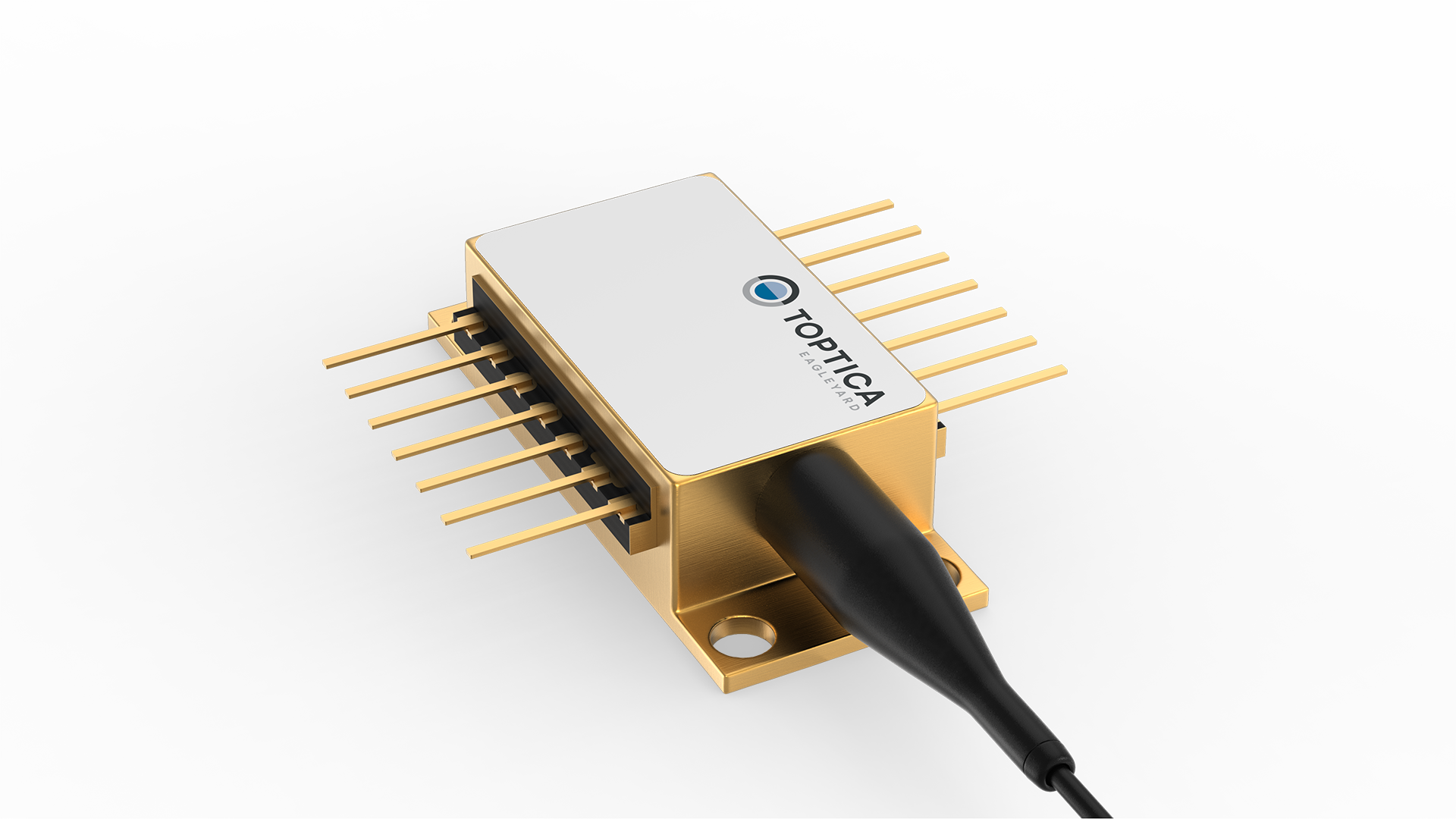
Wavelength: 760 nm
Power: 12 mW
DFB laser diode
CW
Wavelength: 760 nm
Power: 12 mW
DFB laser diode
CW

Wavelength: 760 nm
Power: 40 mW
DFB laser diodeDFB laser diode
CW
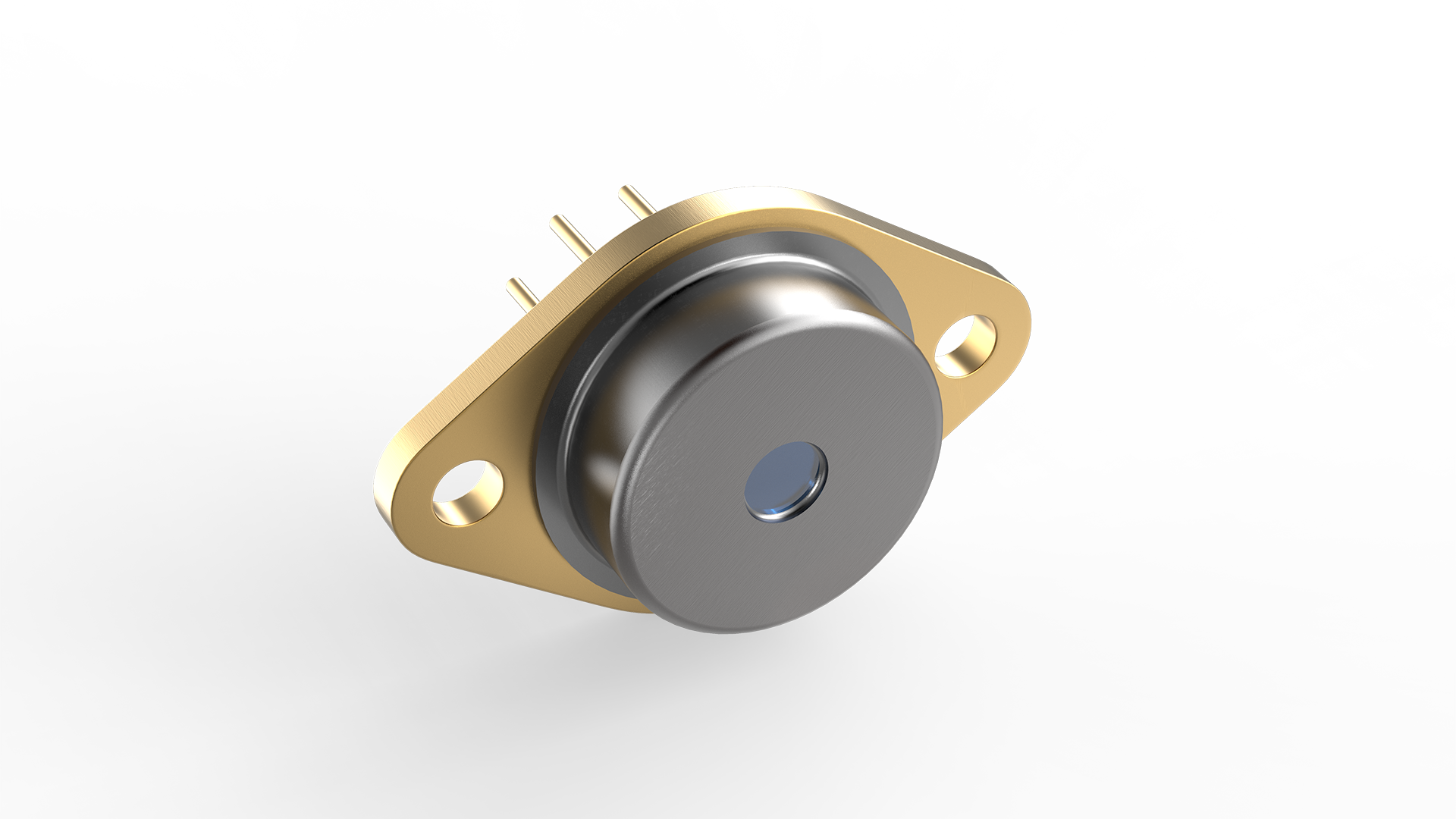
Wavelength: 760 nm
Power: 40 mW
DFB laser diodeDFB laser diode
CW

Wavelength: 760 nm
Power: 40 mW
DFB laser diodeDFB laser diode
CW
Wavelength: 780 nm
Power: 20 mW
DFB laser diode
CW
We can’t wait to hear your specific requirements or questions. Please contact us any time. We’re here to empower your vision!
info@toptica-eagleyard.com
CONTACT
Eagleyard Photonics GmbH
Rudower Chaussee 29
12489 Berlin
Fon: +49 30 6392 452-0
info@toptica-eagleyard.com
Copyright © 2022 TOPTICA EAGLEYARD
You need to load content from hCaptcha to submit the form. Please note that doing so will share data with third-party providers.
More InformationYou need to load content from reCAPTCHA to submit the form. Please note that doing so will share data with third-party providers.
More InformationYou need to load content from reCAPTCHA to submit the form. Please note that doing so will share data with third-party providers.
More InformationYou need to load content from reCAPTCHA to submit the form. Please note that doing so will share data with third-party providers.
More InformationYou need to load content from Turnstile to submit the form. Please note that doing so will share data with third-party providers.
More InformationYou are currently viewing a placeholder content from Juicer. To access the actual content, click the button below. Please note that doing so will share data with third-party providers.
More InformationYou are currently viewing a placeholder content from reCAPTCHA. To access the actual content, click the button below. Please note that doing so will share data with third-party providers.
More Information


