
Application Insights
Harvard Quantum Initiative in Science and Engineering
About Harvard Quantum Initiative in Science and Engineering:
The Harvard Quantum Initiative in Science and Engineering (HQI) is a collaborative network of researchers dedicated to advancing the understanding and development of quantum systems and their practical applications. The initiative supports scientists and engineers in exploring innovative approaches to turning quantum theory into functional technologies, systems, and devices.

Product: miniTA 810 nm
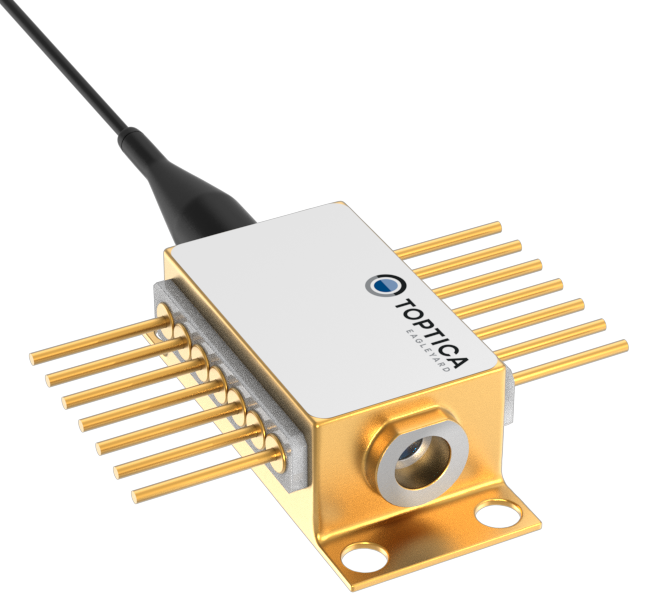
The miniTA is one of the newest innovations from TOPTICA EAGLEYARD and is well-known for its high level of integration in a robust, hermetically sealed butterfly package. This tapered amplifier has an integrated beam collimation and thermal management and users benefit from the ‘plug & play’ option with fiber pigtail seed lasers making it very easy to use as adjustment is not further needed.
The miniTA is available at 670 nm, 765 nm, 780 nm, 795 nm, 810mn, 852 nm and 895 nm.
Wavelength
Power
Laser Type
Operation Mode
810 nm
2 W
Tapered Amplifier
CW
In which product does HQI use EAGLEYARD’s laser diode? For which application is your product used for?
HQI: Our lab is a part of the MIT-Harvard Center for Ultracold atoms (CUA). Within the CUA community, we use EAGLEYARD´s diodes to laser-cool, trap, and image atoms and molecules.
Can you give some insights on how your product works and what role EAGLEYARD’s laser plays?
HQI: A key objective of our lab is to explore the feasibility of various new architectures for quantum information processing. In this vein, we are in the process of constructing a continuously reloading quantum processor based on neutral-atom arrays of Rb and Yb.
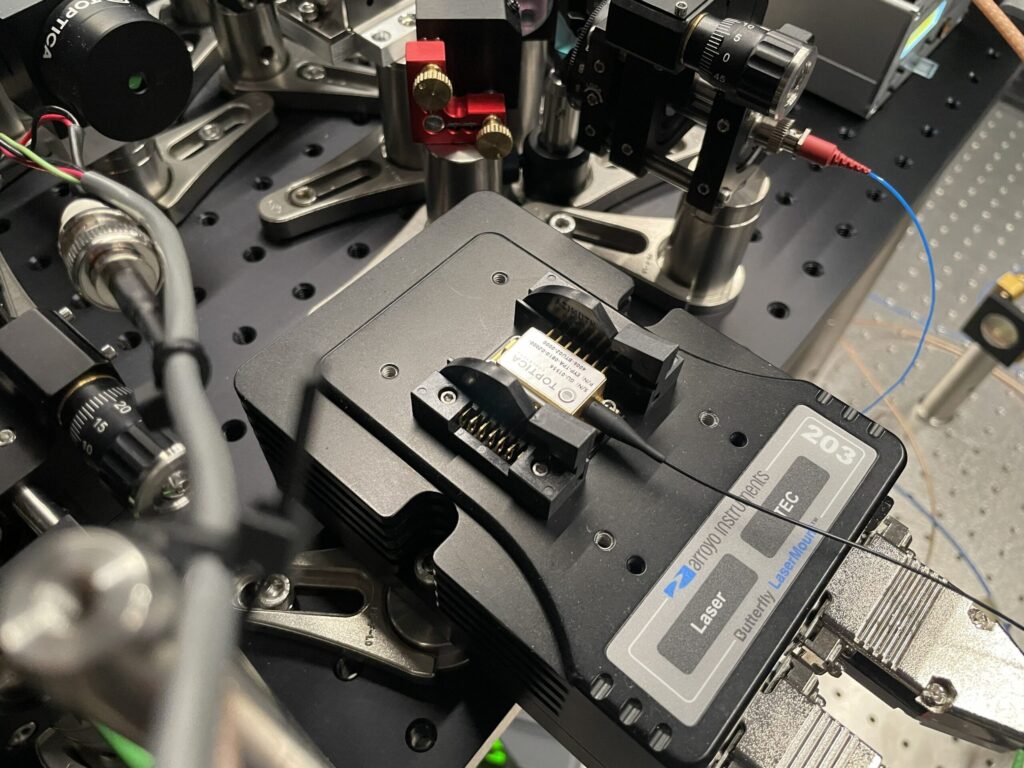
We use the 810 nm miniTA to amplify the light from a seed laser diode at 808 nm. With approximately 2.5 W of output power from the miniTA, we generate optical tweezers which we use to manipulate both Rb and Yb atoms. Currently, our experiment also utilizes the 780 miniECL and miniTA to generate cooling and imaging light for the Rb atoms in the apparatus.
If you have used a different laser diode component before using the one from EAGLEYARD in your product, what was your motivation to switch?
HQI: We previously used 780 nm laser diodes from a different manufacturer before switching to the 780 miniECL. Although the 780 miniECL do not have the highest available output power on the market, we found it to be more robust and notably less sensitive to damage from back reflections. While we experienced considerable instability with the 780 nm diodes from another manufacturer, the 780 miniECL was quick and easy to set up, and we have been using them without issues since.
Can you share insights on the decision-making process towards EAGLEYARD’s laser diode component?
HQI: EAGLEYARD´s laser diodes are generally competitive when it comes to linewidth, power, and output mode. For us, it’s one of the “usual suspects” to check.
When searching for a narrow-linewidth laser source for optical tweezers at 808 nm, we arrived at two initial options:
(1) 2-3 W of power from a tapered amplifier, or
(2) 6-8 W of power from a Ti:Sapphire laser. While Ti:Sapphire lasers can deliver more power, they come at a significantly larger cost and longer lead time. We determined that 2-3 W was sufficient for our initial demonstration and so narrowed our search to tapered amplifiers.
The 810 miniTA had the greatest output power that we could find the in market. Furthermore, the 808 nm tweezers were the first set of optical tweezers that we needed to build the experiment, so it was important that we can quickly get the system working to test out the physics.
How did you experience the collaboration with EAGLEYARD from the first request until it was used in your project?
HQI: Working with EAGLEYARD has been great experience. We initially reached out to EAGLEYARD with questions on how to best mount the 808 nm (note: I forgot if it was the 808 or 810 nm) C-mount tapered amplifier. Very quickly into our communication, EAGLEYARD offered to package the amplifier chip into a butterfly package. This modification really sped up our building process because we already had a standardized procedure for working with butterfly-packaged diodes.
When it came to setting up the miniTA, EAGLEYARD was also extremely helpful in clarifying confusion we had over the input polarization of the amplifier.
EAGLEYARD´s support team responded within a day and we were able to debug the issue within about a week.
What is the advantage of using the selected EAGLEYARD laser diode component compared to alternatives/prior solutions?
HQI: We find that EAGLEYARD´s diodes are robust and meet quoted specifications. The output powers are very competitive, and the diodes are straightforward to setup
How satisfied are you with EAGLEYARD in total?
HQI: Very satisfied 🙂 EAGLEYARD´s diodes are nice to work with and have great performance. My greatest criticism is the lead time. While the lead time for diodes are not bad, they are sometimes a pain point. We delayed switching over the 780 nm miniECL because of the 5-month lead time. I know of situations where colleagues want to use EAGLEYARD´s diodes but can’t because it doesn’t fit within their project timeline.
Editor’s note: We are aware that lead times for this product were initially longer than expected. While we anticipated strong interest at product launch, the demand exceeded our forecasts and temporarily extended delivery times. Since then, we’ve implemented additional production capacity and inventory planning measures. As a result, our average lead time has been reduced to approximately 12 weeks, with select units now available from stock.
We thank HQI for these great insights!
You can download this application insight case.
CONTACT US
We can’t wait to hear your specific requirements or questions. Please contact us any time. We’re here to empower your vision!
info@toptica-eagleyard.com
